
MARRIED MAN STAYING IN LIVE-IN RELATIONSHIP NOT A CRIME – Allahabad High Court
In a ruling that challenges societal norms and reinforces constitutional rights, the Allahabad High Court has declared that a married man cohabiting in a live-in relationship with another woman does not commit a crime. Delivered in Anamika and Another vs. State of U.P. and Others (Criminal Misc. Writ Petition No. 3799 of 2026), Justice [Note: Justice’s name not specified in query; typically cited in full judgments] dismissed FIRs lodged under serious charges like Section 376 (rape) and Section 506 (criminal intimidation) of the Indian Penal Code (IPC).
This decision, handed down in early 2026, underscores the judiciary’s evolving stance on consensual adult relationships amid India’s conservative backdrop. It bridges the gap between live-in arrangements—now recognized under law—and traditional marital fidelity, prioritizing individual autonomy over moral judgments.
Case Background: From Complaint to Courtroom Drama
The petitioners, Anamika and her partner (a married man), faced police action after the man’s legally wedded wife filed an FIR. Allegations included rape by deceit, abduction, and intimidation, stemming from the couple’s live-in setup. The wife claimed her husband was “lured” into the relationship, invoking moral and emotional distress.
Frustrated by what they termed “police overreach,” the couple approached the Allahabad High Court via a criminal miscellaneous writ petition. They argued the FIR was a tool for personal vendetta, lacking evidence of coercion or non-consent. Key contention: No law criminalizes consensual live-in relationships between adults, regardless of marital status.
Supporting affidavits highlighted the relationship’s voluntary nature, with Anamika asserting full consent and no promise of marriage. This mirrored rising live-in cases in urban India, where courts increasingly intervene against misuse of criminal law in domestic disputes.
Court’s Key Observations: Dismantling the Criminal Narrative
The bench pierced through the complainant’s emotional pleas, focusing on legal merits. Core holdings include:
- No Criminality in Consent-Based Live-In: “A consensual live-in relationship between two adults, even if one is married, does not attract criminal liability under IPC Sections 376 or 506,” the court observed. It stressed that marriage doesn’t strip individuals of personal liberty under Article 21 of the Constitution.
- FIR Abuse as Malicious Prosecution: Labeling the FIR “frivolous,” the court noted vague allegations without proof of deceit or force. It invoked Supreme Court precedents like Kans Raj v. State of Punjab (2000), which limits rape charges to non-consensual acts.
- Protection Against Moral Policing: The judgment critiqued FIRs driven by “societal morality” rather than law, echoing Deepak Gulati v. State of Haryana (2013) where the Supreme Court quashed a similar rape FIR in a consensual relationship.
- Remedy for Aggrieved Spouses: The court advised civil remedies like restitution of conjugal rights (Section 9, Hindu Marriage Act) over criminal escalation.
These observations align with progressive rulings, such as the Supreme Court’s recognition of live-in rights in D. Velusamy v. D. Patchaiammal (2010) and Indra Sarma v. V.K.V. Sarma (2013), granting cohabitees palimony and maintenance akin to spouses.
Legal Implications: Reshaping Relationship Laws in India
This verdict sets a precedent for High Courts nationwide, curbing FIR misuse in matrimonial feuds. It reinforces:
- Article 21’s Vast Ambit: Right to life includes choosing partners freely, free from state moral intrusion.
- Gender-Neutral Justice: While often protecting women in live-ins, courts now shield men from vengeful complaints.
- Burden on Police: Stations must scrutinize complaints before registering cognizable offenses, preventing harassment.
For live-in couples, it signals safety in consent-documented relationships (e.g., affidavits). However, it doesn’t legalize bigamy—bigamy remains punishable under Section 494 IPC if formalized.
| Aspect | Pre-Ruling Concern | Post-Ruling Clarity |
|---|---|---|
| Consent | Easily contested as “deceit” | Must prove non-consent; morality irrelevant |
| Married Status | Grounds for FIR | Not criminal unless bigamy/abduction |
| Remedies | Criminal FIRs rampant | Shift to civil courts preferred |
| Precedents | Mixed (e.g., rape by promise) | Stronger protection for adults |
Societal Ripple Effects: Beyond the Courtroom
India’s live-in landscape is transforming—NCRB data shows rising such relationships amid delayed marriages and urbanization. Yet, cultural stigma persists, with 70% of rural FIRs in such cases rooted in “honour” disputes (per 2025 reports).
This ruling promotes judicial transparency, urging media and police to differentiate emotion from evidence. It empowers women like Anamika, often branded “homewreckers,” while cautioning against weaponizing law in heartbreaks.
Critics argue it undermines marriage sanctity, but the court countered: “Law regulates conduct, not conscience.”
Conclusion: A Step Towards Liberal Jurisprudence
The Allahabad High Court’s ruling in Anamika is a clarion call for liberty in love. By quashing overzealous FIRs, it protects consensual bonds from criminal shadows, fostering a mature legal framework. As live-ins normalize, expect more such battles—but with clearer judicial guardrails.
For the full judgment, visit the Allahabad High Court website. This analysis draws from official records and precedents as of March 2026.

Post a comment
Related Posts
March 29, 2026
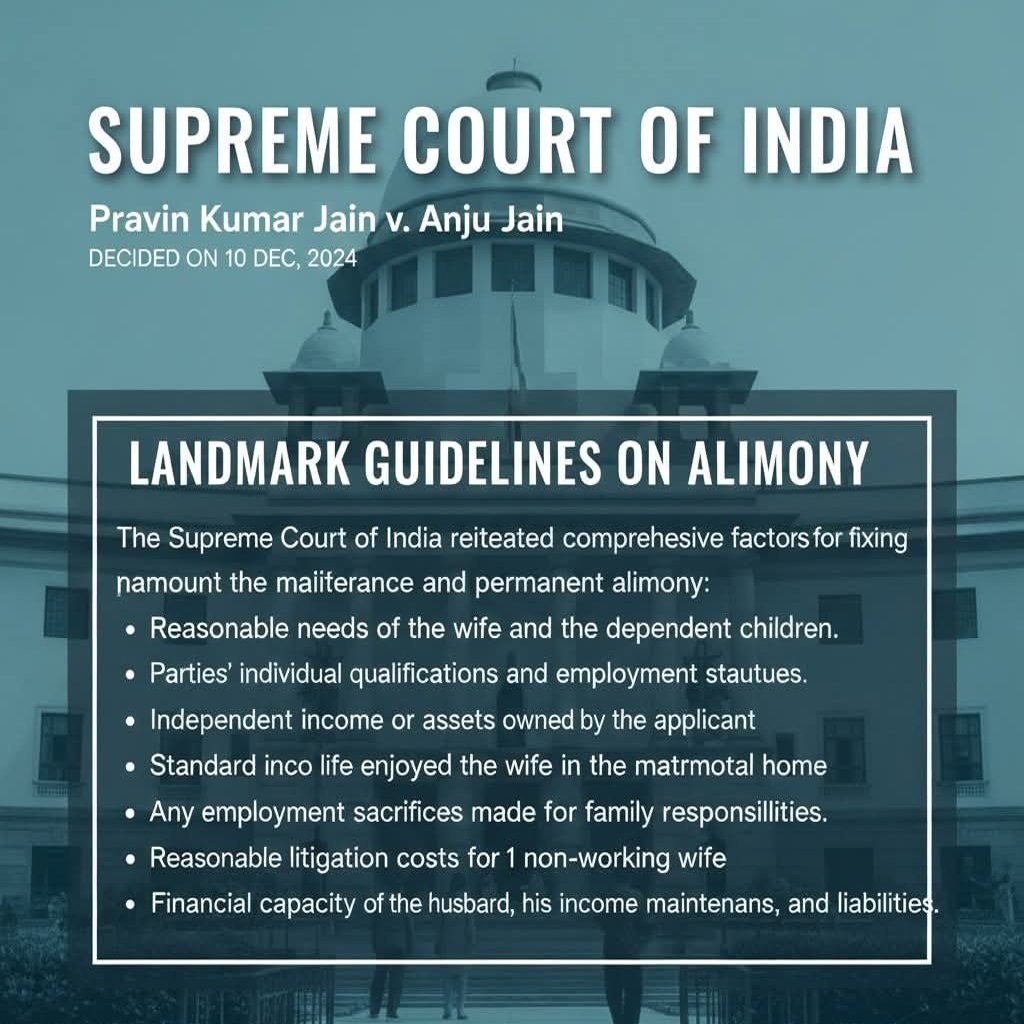
Permanent Alimony Guidelines
Supreme Court Breaks New Ground: Pravin Kumar Jain v. Anju Jain Judgment on Irretrievable Breakdown…

March 25, 2026
Will Stopping Payment of a Cheque Result in a Cheque Bounce Case?
A cheque “bounces” when a bank refuses payment due to insufficient funds, signature mismatch, or—crucially—stop…