Supreme Court Breaks New Ground: Pravin Kumar Jain v. Anju Jain Judgment on Irretrievable Breakdown and Permanent Alimony Guidelines
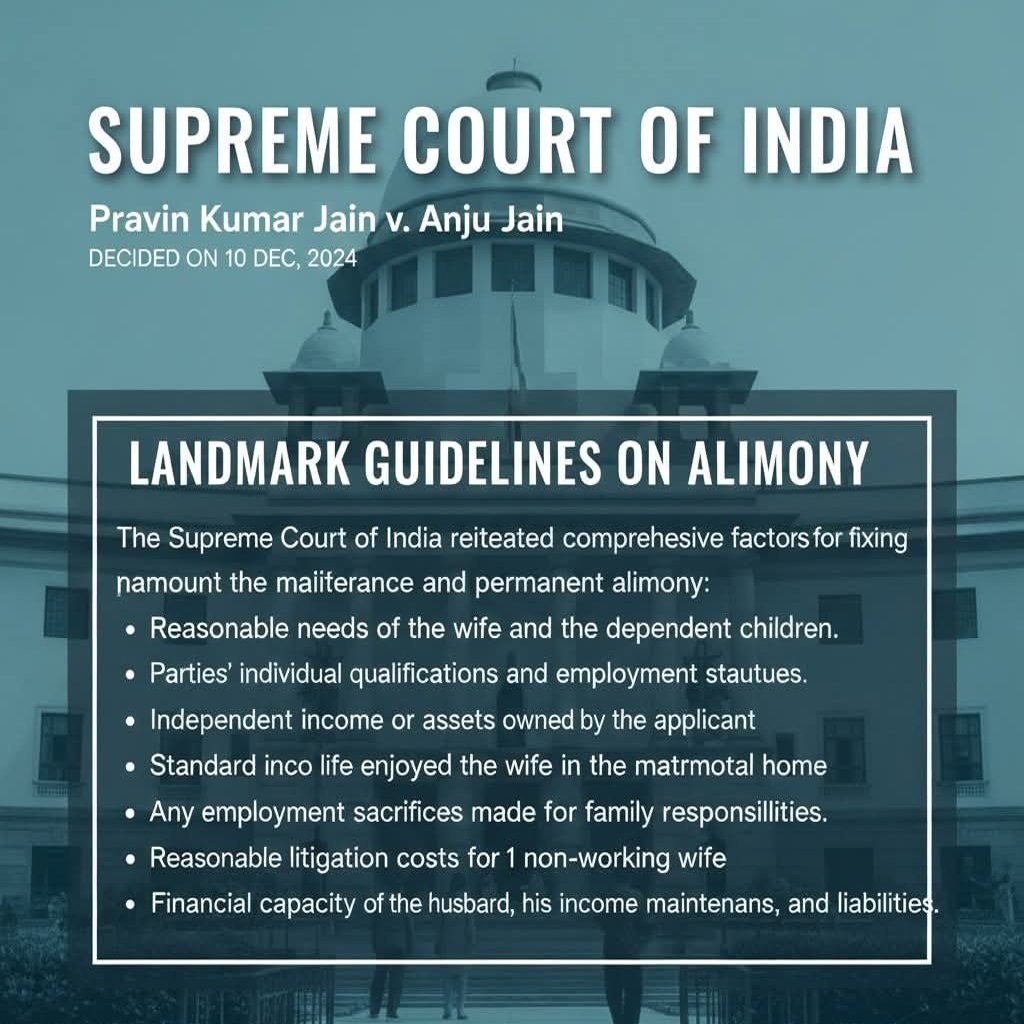
In a landmark ruling on December 10, 2024, the Supreme Court of India dissolved a 20-year-old marriage in Pravin Kumar Jain v. Anju Jain, invoking extraordinary powers under Article 142. This decision not only ends a “completely dead” union but sets fresh benchmarks for permanent alimony, emphasizing fairness, transparency, and the dependent spouse’s post-divorce lifestyle. As a veteran legal journalist with over two decades covering India’s top courts, I’ve dissected this judgment to make its nuances accessible—bridging legalese with real-world impact for families navigating divorce.
The Dead Marriage: Invoking Article 142 for Dissolution
At the heart of Pravin Kumar Jain v. Anju Jain lies the irretrievable breakdown doctrine. The couple, separated for over two decades with zero reconciliation prospects, saw the Supreme Court declare their marriage emotionally and practically defunct.
- Article 142 Powers: Under Article 142 of the Constitution, the apex court wields “complete justice” authority, bypassing rigid statutory grounds like cruelty or desertion. Justices recognized that forcing such unions perpetuates misery, echoing precedents like K. Srinivas Rao v. D.A. Deepa (2013).
- 20+ Years of Separation: Pravin and Anju’s long estrangement underscored no revival possible. The bench noted, “The marriage is completely dead,” prioritizing human dignity over hollow legal formalities.
This isn’t novel—courts have dissolved marriages on breakdown before—but this ruling amplifies its application, signaling judicial readiness to end sham unions decisively.
Record-Breaking Alimony: ₹6 Crores in One-Time Settlement
The Court mandated a hefty one-time payout, balancing empathy for the wife and son with the husband’s capacity.
- Wife’s Share: ₹5 crores as permanent alimony to Anju Jain, ensuring lifelong financial security without ongoing disputes.
- Son’s Provision: ₹1 crore for their major son, factoring in soaring costs of competitive higher education and his dependency despite adulthood.
This ₹6 crore total reflects the couple’s affluent background, rejecting monthly maintenance to avoid perpetual litigation. It’s a pragmatic shift, promoting closure in high-stakes divorces.
Comprehensive Guidelines for Permanent Alimony: Building on Rajnesh v. Neha
Drawing from Rajnesh v. Neha (2020)—the gold standard for maintenance—the Supreme Court reiterated and expanded factors for courts nationwide. These ensure alimony isn’t punitive but restorative.
Here’s the distilled framework:
- Status and Lifestyle: Social standing, financial background, and the matrimonial home’s luxury standard.
- Claimant’s Needs: Reasonable requirements of the wife and children, including education and healthcare.
- Employment and Sacrifices: Parties’ qualifications, jobs, and any career pauses (e.g., wife’s family duties).
- Assets and Income: Wife’s independent resources; husband’s earnings, debts, and existing obligations.
- Litigation Costs: Coverage for non-earning spouses’ legal expenses.
- Transparency Mandate: Full financial disclosure by both, curbing hidden assets.
| Factor | Purpose | Example from Case |
|---|---|---|
| Social/Financial Status | Match pre-divorce lifestyle | Affluent Jain household standards |
| Dependents’ Needs | Secure future | Son’s elite education costs |
| Husband’s Capacity | Avoid ruin | Pravin’s business income assessed |
| Wife’s Sacrifices | Compensate equity | Family-focused career breaks |
The bench stressed: Alimony aims for “reasonable living standards” post-divorce, not husband punishment. Courts must scrutinize affidavits rigorously to prevent evasion.
Broader Implications: Reshaping Indian Divorce Law
This judgment fortifies financial equity in matrimonial disputes, especially for urban elites where assets run into crores.
- Irretrievable Breakdown Norm: Paves way for legislative reform; multiple benches now favor Article 142 proactively.
- One-Time Settlements Preferred: Reduces acrimony, ideal for NRIs or business families.
- Son’s Maintenance Novelty: Extends support to adult children in dependency, amid India’s rising education expenses.
- Transparency Push: Warns of perjury penalties, targeting underreported incomes.
For women from modest means, it signals hope; for men, a reminder of accountability without excess. Expect lower courts to cite this prolifically, potentially slashing divorce backlogs.
Why This Matters for Every Indian Family
Pravin Kumar Jain v. Anju Jain humanizes family law, prioritizing closure over coercion. In an era of 50% urban divorce rates (per NCRB data), it reassures dependents while safeguarding payers. Full judgment available on SCI website; consult lawyers for tailored advice.
Post a comment
Related Posts

March 28, 2026
Married man staying in live-in relationship not a crime
MARRIED MAN STAYING IN LIVE-IN RELATIONSHIP NOT A CRIME – Allahabad High Court In a…